 Español
 English


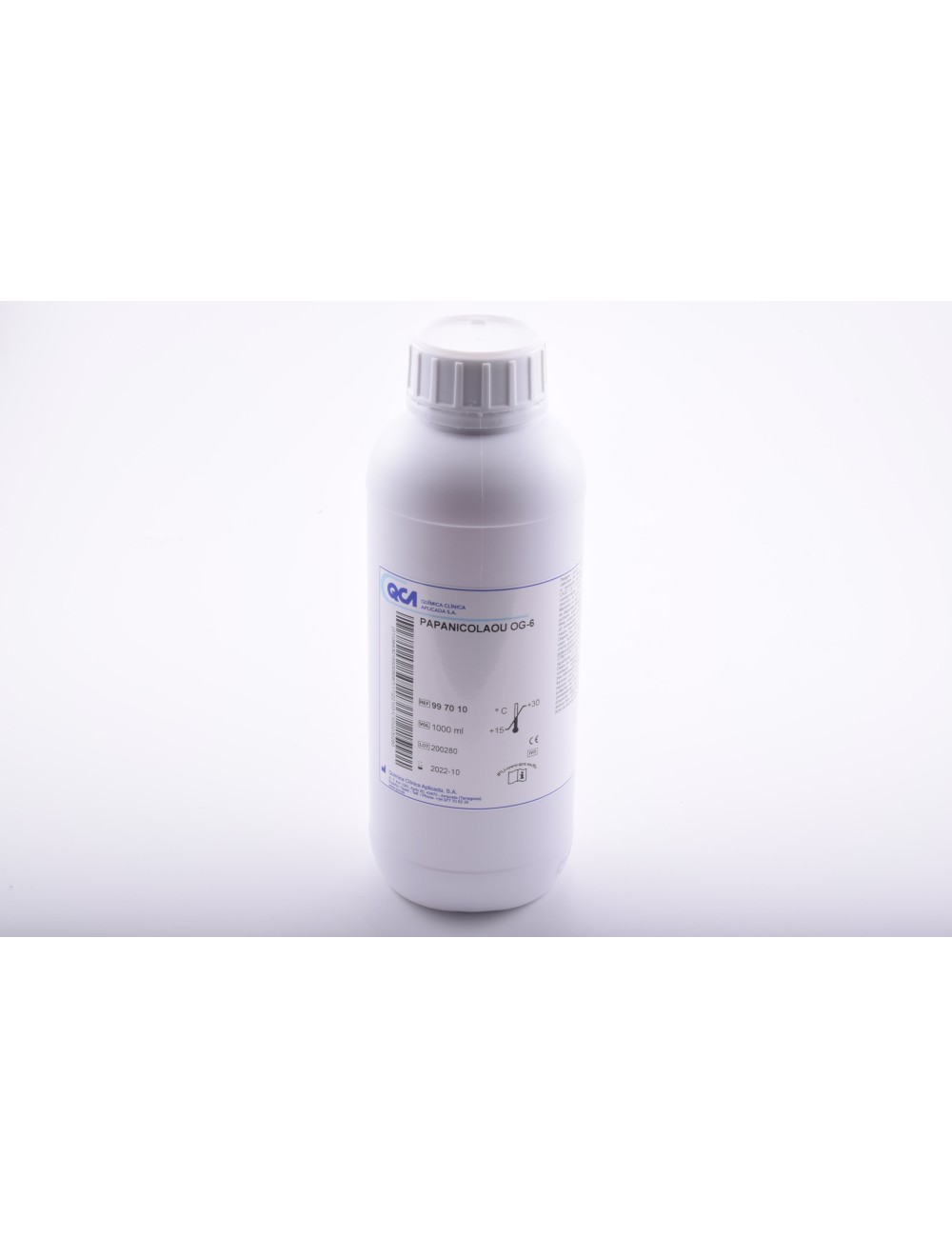
ORANGE G-6 SOLUTION, 1000 mL
997010
To access the documentation you must be registered Register


For cytoplasm staining, without methanol.
| State | Liquid |
| Storage temp. | +15 / +30 ºC |
| Technique | Polychromatic staining |
Documentation
 Download
Download
Download
Download
Download
Previous batches :
Download
PRINCIPLE
The Papanicolaou test, which owes its name to Dr Georgios Papanicolaou, a pioneer in cytology and cancer, is performed to diagnose cervical cancer or cancer in other organs. It makes it possible to detect changes in cells which may be cancer precursors. The fi rst step in this technique is the staining of nuclei with haematoxylin. The second step is the staining of cytoplasm with an orange solution, which stains the mature cells and the keratinised cells with diff erent intensities. The so-called polychrome solution, which is a mixture of eosin, light green SF and Bismarck brown, is used in the third step. The diff erentiation of simple squamous epithelium is shown with the polychrome solution. The dyes for the staining of the cytoplasm are fi xed in the extracellular components of the tissue and enable its diff erentiation. The Orange G stain is also an acid stain which has greater penetration capacity than eosin in dense structures, therefore enabling a greater staining of keratinised cells. Stains from the EA group combine the staining capacity of an acidic dye, such as Eosin, with the staining obtained using the Light Green stain, which, due to its less acidic nature, adds staining shades to the cytoplasmic structure.
For cytoplasm staining, without methanol.
| State | Liquid |
| Storage temp. | +15 / +30 ºC |
| Technique | Polychromatic staining |