 Español
 English


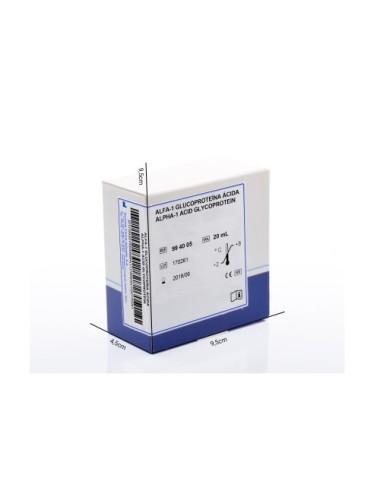
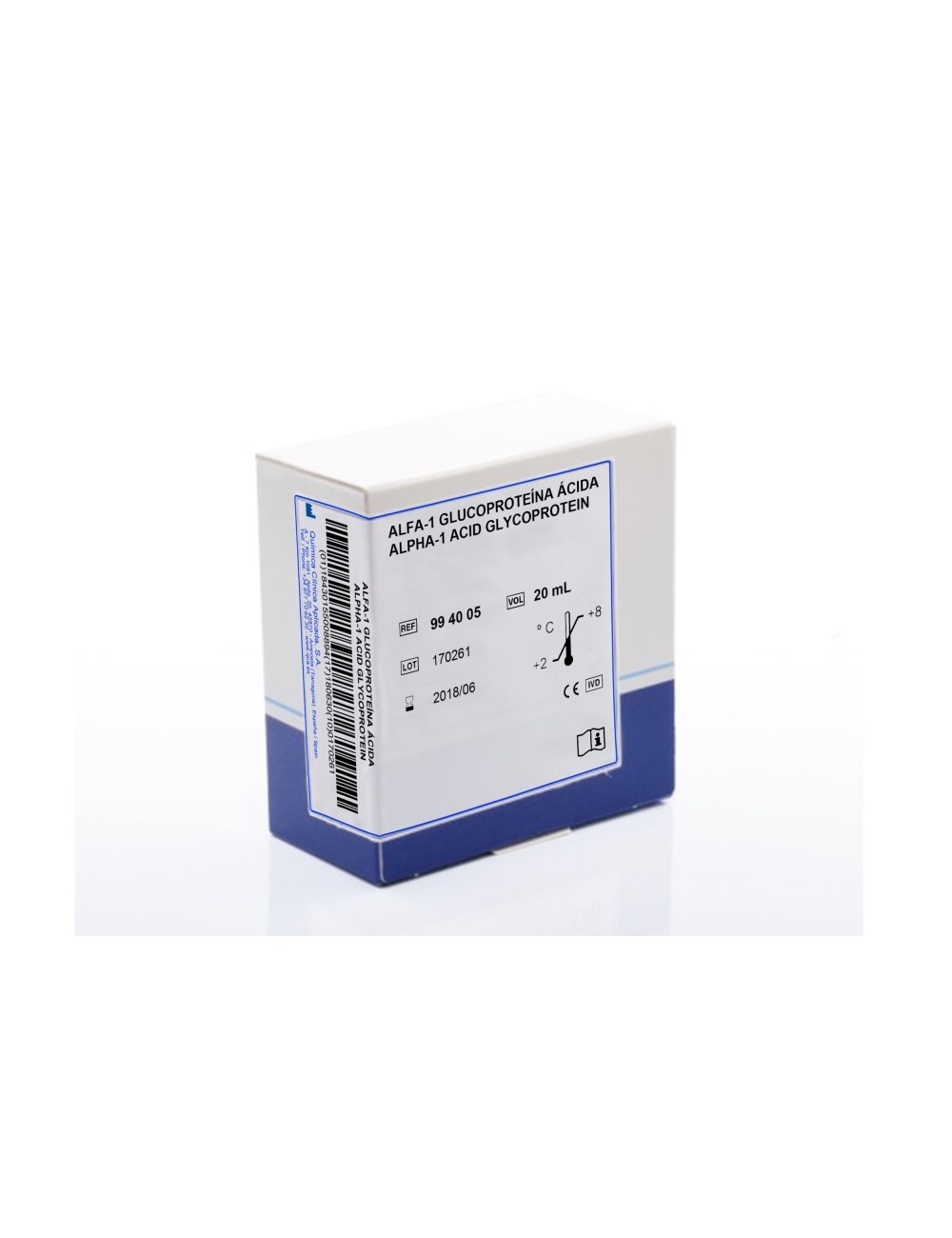
alpha-1 ACID GLYCOPROTEIN, 20 mL
994005
To access the documentation you must be registered Register


Item available on request. Please check availability and final delivery time with our Sales Department.
For in vitro determination of α-1 acid glycoprotein in serum or plasma.
| State | Liquid |
| Storage temp. | +2 / +8 ºC |
| Technique | Immunoturbidimetric method |
Documentation
 Download
Download
Download
Download
Download
Previous batches :
Download
PRINCIPLE
The reagent allows quantifying the level of human α-1 acid glycoprotein present in the sample by comparing the turbidimetric response produced with that obtained from a standard curve of known concentrations of human α-1 acid glycoprotein. The reagent is an antiserum anti-human α-1 acid glycoprotein which reacts with the α-1 acid glycoprotein of the serum giving protein aggregates. This aggregation process produces an increase in the Abs. of the system.
DIAGNOSTIC USE
The α-1 acid glycoprotein (AAG), also known as orosomucoid, is a major constituent of the seromucoid fraction of plasma. AGG is synthesized mainly by hepatocytes. AGG is a lipocalin, a family of protein which bind hydrophobic compounds as progesterone and
related hormones. Plasma AAG concentration increase up to fourfold in response acute-phase (trauma, inflammation, or tissue necrosis) and serves as an indicator of the clinical activity of ulcerative colitis. AGG concentration are also increased by glucocorticoid hormones. Synthesis and plasma AGG concentration are decreased by estrogens. A single test result could not be used to make a clinical diagnosis. It should integrate clinical and laboratory data.
Item available on request. Please check availability and final delivery time with our Sales Department.
For in vitro determination of α-1 acid glycoprotein in serum or plasma.
| State | Liquid |
| Storage temp. | +2 / +8 ºC |
| Technique | Immunoturbidimetric method |